
In my musicological and pedagogical work, I explore the architecture of modern jazz harmony and guide students toward discovering their own creative identity. My university textboo Fundamentals of Jazz Harmony and a monograph Traditional and Progressive Harmonic Progressions in Contemporary Jazz reflect the search for connections, structures, and expressive freedom in jazz. In the songbook project Music Fairy and Her Magical World I make music theory accessible to children in a clear, auditory way—through songs that set its key concepts to music.
Music Fairy and Her Magical World (A-knihy, Martin, 2023) – a guide to music theory set to music (not only for children).
Web page of Muzicka, videoclip of Music Fairy and her Magical World
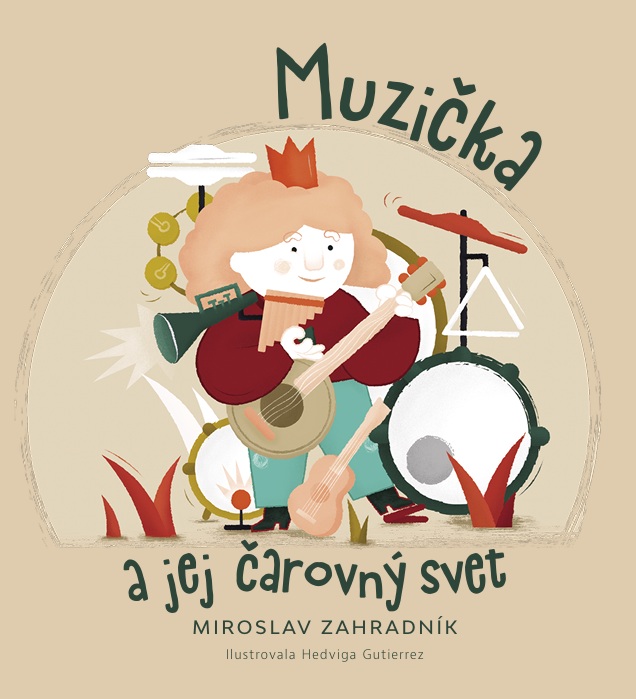
Review of the Book
Music Fairy and Her Magical World through the perspective of Andrej Kellenberger – musician,
music educator and publicist.
When I met Miro Zahradník some time ago and he began speaking about
his idea for a children’s music theory book, I immediately took notice. To turn it into
music theory—this bogeyman of music schools—into a kind and friendly guide through the world
of music? An almost superhuman task! All the more did I become interested in the result, and now, as the book lies before me,
the beautifully bound, vividly colored Muzička and Her Magical World, I can only acknowledge with appreciation that
hats off!
Miro, as a person firmly standing between the continents of classical music, popular music, and
jazz, has created a work that perhaps appears once in a generation. Playfully, yet systematically,
simply yet comprehensively, and with remarkable wit, he builds—through individual chapters—
(staff notation, rhythm, intervals, melody, scales, chords, etc.) musical knowledge
of a child—from basic knowledge toward a holistic perception of music.
Above all, I must highlight the songbook, where, in fourteen well-crafted and imaginative pieces,
original songs, he musically illustrates individual topics of music theory.
Simply put, it is a bullseye. Muzička and Her Magical World should not be missing from the collection of
music school libraries, but should also be part of the home library of every student
of a music school as an essential part of it.
And I would wish it a life of well-thumbed pages, dog-eared corners, underlined sentences,
in short, all the marks of a frequently used book.
With sincere admiration,
Andrej Kellenberger
Fundamentals of Jazz Harmony – Principles and Connections (FiF UK, Bratislava, 2018)
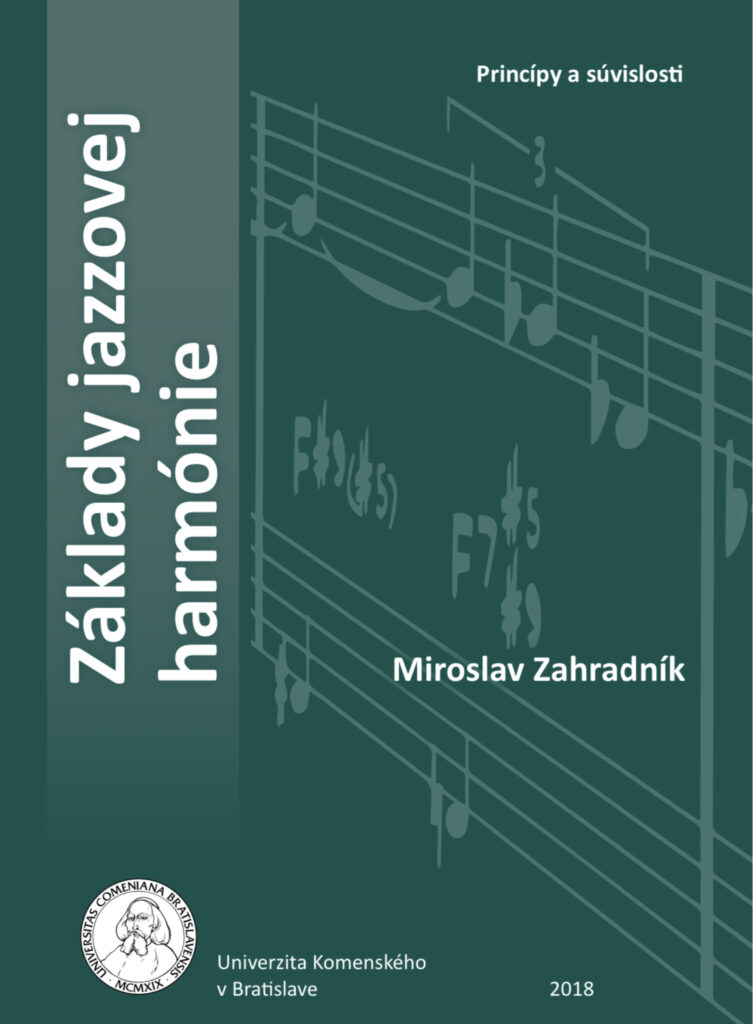
Review of the Book
Not every day is a Sunday, but for Slovak jazz theory there will surely be a Sunday on the day when a slender book by guitarist, composer, musicologist, and educator Miro Zahradník entitled Fundamentals of Jazz Harmony is published. And not only for theory itself, but especially for all practicing musicians—whether beginners in jazz or more experienced jazz players. Everyone will find topics that speak to them. Drawing on essentially all the key jazz theoretical works of D. Baker, G. Russell, D. Liebman, N. Slonimsky, and many other authors, Miro Zahradník—as both a music theorist and jazz musician—presents a coherent system of highly useful insights. Creatively employing the knowledge of Slovak musicology (M. Filip, R. Berger, J. Beneš), which primarily focused on classical music, he applies and connects it to jazz and its characteristic improvisation. He introduces concepts such as sub-octave, octave, and supra-octave thinking, or the system of privileged intervals by the Slovak composer and music theorist Juraj Beneš, as well as the dynamic and tonal core and the principle of centralization by the music theorist Miroslav Filip. He also touches on the principles of harmonic thinking in Eugen Suchoň’s compositional language, searching for and finding important parallels between classical music and jazz, thus bringing the history of music into the present-day jazz context. I will only briefly mention the titles of some chapters so that the discerning reader can get an idea of the broad thematic scope of this slim book: Free Tonality, Harmonic Relations of Dynamic Tonality, Reharmonization, Chromatization of the Diatonic Space, Symmetry in Jazz Harmony, The Theory of Chord Scales, Linear Thinking in Jazz Harmony, Modality… simply a joy to read. And that is not all. There are numerous practical examples, harmonic and melodic analyses, a system of chord symbols, a wealth of scales, and of course a useful contemporary glossary of terminology that helps less experienced readers enter the world of modern jazz. An excellent read, which however should be combined with playing the examples, analytical listening, and of course practicing on an instrument of any kind.
Wishing you much enjoyment in this, Andrej Kellenberger.
Traditional and Progressive Harmonic Progressions in Contemporary Jazz (FiF UK, Bratislava, 2018)
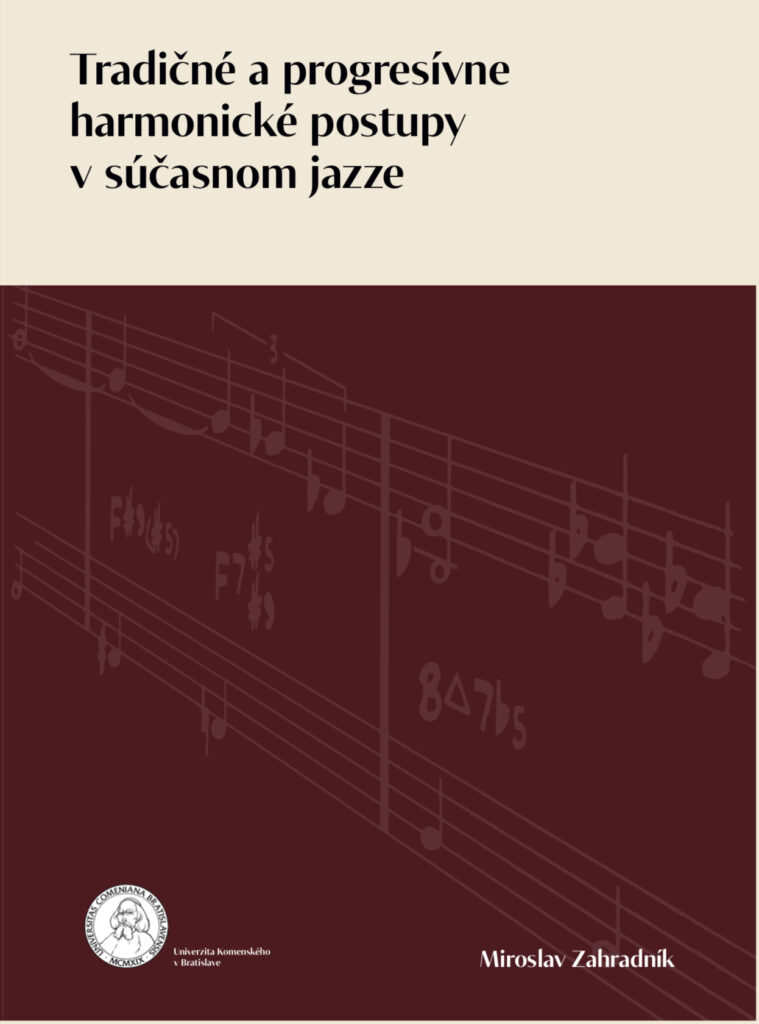
Review of the Book
A few months after the first book by Miro Zahradník entitled Fundamentals of Jazz Harmony appeared on the Slovak music-literary market, its welcome successor is here, bearing an equally captivating title: Traditional and Progressive Harmonic Practices in Contemporary Jazz. While the first is more of a textbook, the second is a concise and insightful monograph on the development of harmonic thinking in jazz—from bebop to the contemporary soundscapes of Bill Frisell. Across eight chapters—1. Problem Areas, Current State of the Topic; 2. On Terminology and Harmonic Principles in Jazz; 3. Theoretical Foundations for Clarifying Harmonic Relationships in Jazz; 4. Examples of Harmonic Relations of Dynamic Tonality in Standard Jazz Repertoire; 5. Linearity in Jazz Harmony; 6. Modality in Jazz Harmony; 7. Ambient Sound and Sound Painting in Jazz; 8. Selected Figures of the Slovak Jazz Scene After the Fall of the “Iron Curtain” (these are only chapter titles!)—it is in fact the subchapter headings that bring real excitement. A random selection might include: Dynamism as an Important Phenomenon of Jazz Harmony; Jazz Harmony in Light of the System of Privileged Intervals; Symmetry as a Modern Refreshment of Jazz Harmony; The Harmolodic Concept; Basic Principles of Constructing Sound-Painting Chords… Systematically, the author guides the reader through the changing face of jazz music in time and space.
Miro Zahradník, as a curious jazz musician, composer, arranger, and guitarist, seems to formulate questions for himself, which are then concisely answered by the individual chapters—answers he now offers to equally perceptive and inquisitive enthusiasts of jazz music. In terms of both scope and depth, this book is entirely unique within Slovak jazz-focused music literature. It would be difficult for me to say what interested me the most, as it contains such a wealth of fascinating information in one place, but chapters devoted to Slovak figures—Matúš Jakabčic and Andrej Šeban and their contribution to jazz music and improvisation—are of exceptional value for the Slovak reader. I also highly appreciate the very authentic account of the phenomenal Bill Frisell and his “Monk-like” approach to musical creation. But I do not want to do injustice to the other chapters—truth be told, I gladly return to this book, and I would be glad if it were embraced by as many eager readers as possible among young musicians, conservatory students, and students of other music schools.
Andrej Kellenberger 06. 03. 2020
Teaching materials on applied music theory for jazz guitarists
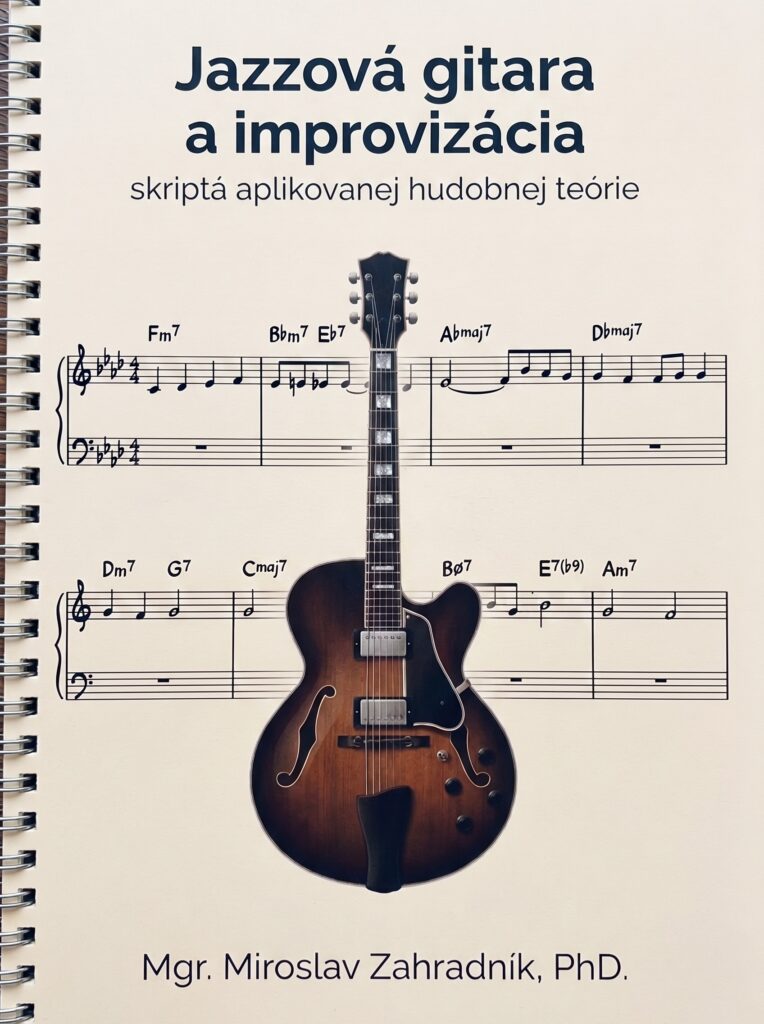
Sample
Scientific and publication activity:
AEC – Scientific papers in peer-reviewed foreign scientific proceedings and monographs
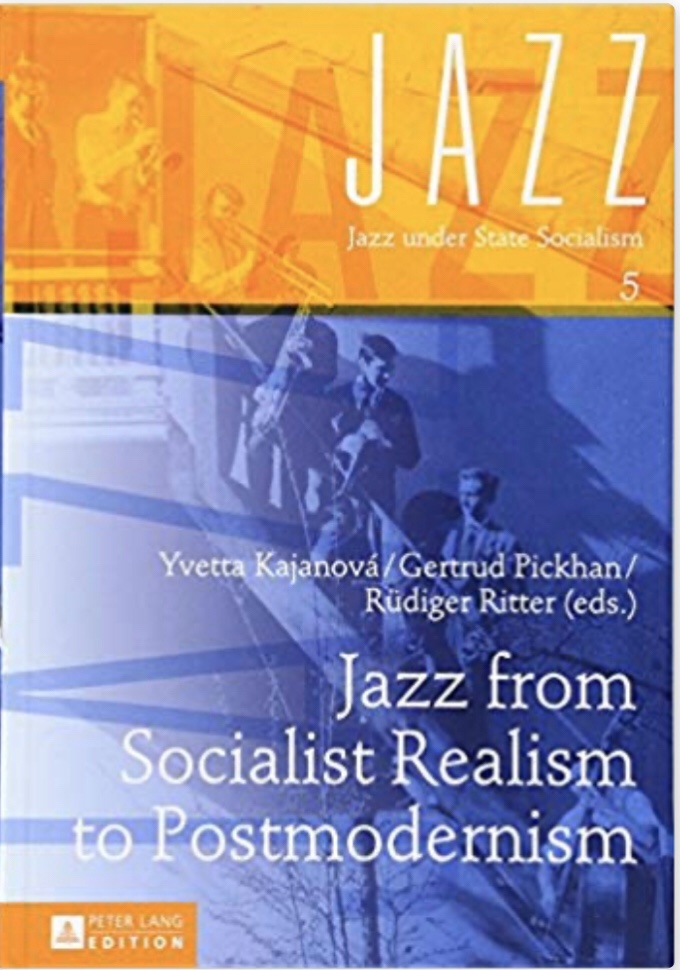
Zahradník,M.: Jazz personalities after the Downfall of the Iron Curtain Matúš Jakabčic and his contribution to Slovak jazz, In: Jazz from socialist realism to postmodernism (eds. Yvetta Kajanová, Gertrud Pickhan, Rudiger Ritter). Frankfurt am Main : Peter Lang, 2016. ISBN 978-3-631-67173-3. – S. 244-263 ( editionJazz under State Socialism vol. 5)
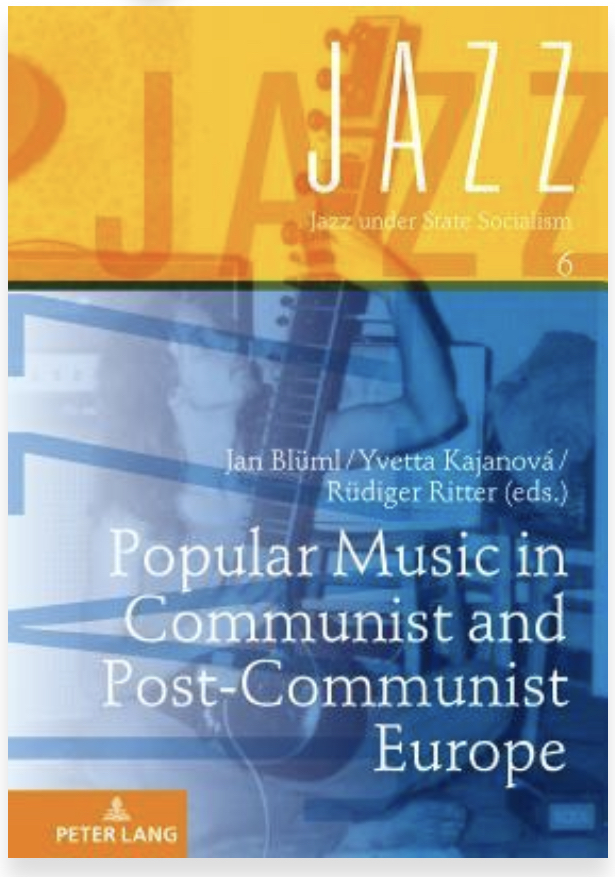
Zahradník,M.: Jazz harmony from the perspective of the Most Important Czech/Slovakian and Foreigh Theorists, Univerzita Palackého Olomouc Popular Music in Communist and Post-Communist Europe: State of Research, Perspectives (28-29 march 2017) –ed. Jan Bluml, Yvetta Kajanová, Rudiger Ritter, Peter Lang, Frankfurt am Main, (edition Jazz under State Socialism vol. 6), 2018
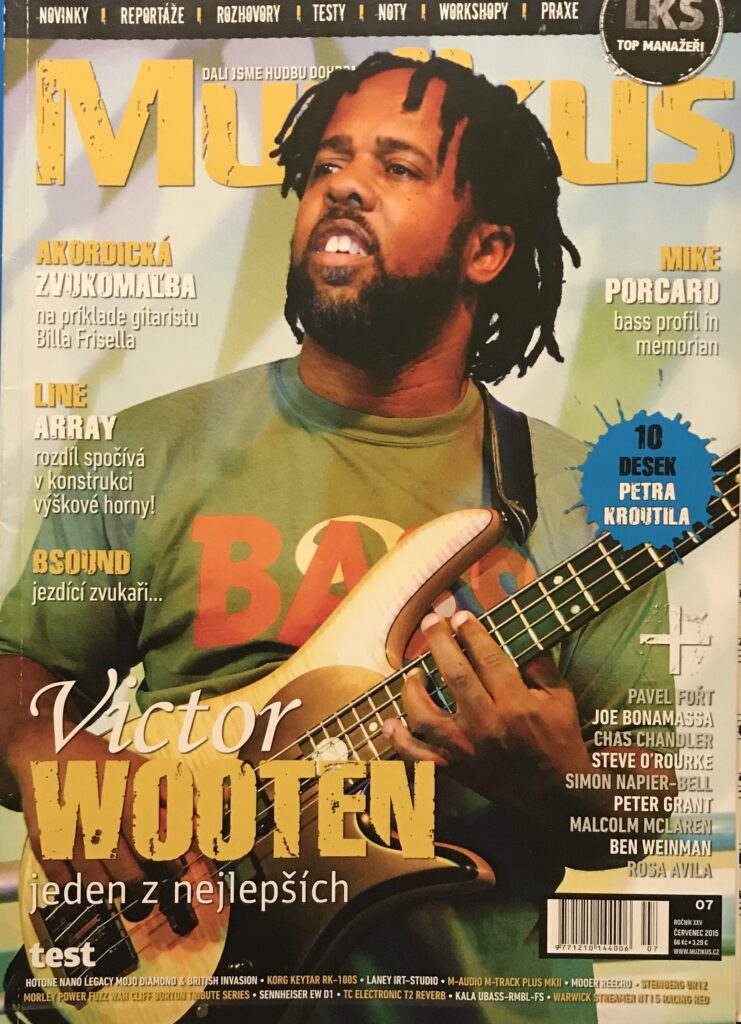
Zahradník, M.: Chordal sound painting on the example of guitarist Bill Frisell . In: Muzikus. – roč. 25, č.7 (2015)
Zahradník, M.: Ambient sound and sound painting in jazz. In: Musicologica – č.1 (2015)
Zahradnik, M.: Current issues in jazz harmony – dynamic tonality. In: Musicologica – č.1 (2024)
Chameleón jazzovej gitary – John Scofield [John Scofield – the Chameleon of Jazz Guitar]. In: Hudobný život, 1–2/2013, pp. 46–48
Bill Frisell – Gitarový vizionár [Bill Frisell – the Visionary of the Guitar]. In: Hudobný život, 5/2013, pp. 30–32
Jim Hall – Nadčasový lyrik [Jim Hall – the Eternal Lyric Poet]. In: Hudobný život, 1–2/2014, pp. 43–46
Larry Coryell – The Father of Jazz Fusion Guitar, [Larry Coryell – the Father of Guitar Fusion] In: Hudobný život, 4/2017, pp. 36,37
Selected reviews pre skjazz.sk, jazz.sk, novypopular.sk, Hudobný život
- A selection from my reviews focused on key figures of world jazz.
John McLaughlin
https://www.jazz.sk/articles/report-ina-dimenzia-johna-mclaughlina
Pat Metheny
https://www.jazz.sk/articles/report-jazzfestbrno-pat-metheny-unity-band
https://hc.sk/hudobny-zivot/clanok/jazz/1401-vecer-s-jazzovou-legendou/
https://hc.sk/hudobny-zivot/clanok/publicistika/298-pat-metheny-the-orchestrion-tour/
Gary Burton & Julan Lage
https://www.jazz.sk/articles/report-new-gary-burton-quartet
https://archiv.skjazz.sk/recenzie.php?zobraz=11624
Jonathan Kreisberg
https://www.jazz.sk/articles/report-jonathan-kreisberg-quartet-jazzfestbrno-semilasso-2042012
Lonnie Smith & Jonathan Kreisberg
https://archiv.skjazz.sk/recenzie.php?zobraz=6883
Kurt Rosenwinkel
https://www.jazz.sk/articles/report-tajny-big-bandovy-svet-kurta-rosenwinkela
Al DiMeola & Gonzalo Rubalcaba
https://www.jazz.sk/articles/di-meola-a-rubalcaba-naplnili-obatenu-pyramidu
Bill Frisell
https://www.jazz.sk/jazzman/bill-frisell
https://archiv.skjazz.sk/recenzie.php?zobraz=10893
https://archiv.skjazz.sk/recenzie.php?zobraz=6074
Bill Frisell – rozhovor
https://archiv.skjazz.sk/rozhovory.php?zobraz=12351
Steve Vai
https://www.popular.sk/steve-vai-reportaz-z-koncertu-v-mmc
Joe Satriani
https://www.popular.sk/joe-satriani-super-rock-gitaroveho-genia
Herbie Hancock
https://archiv.skjazz.sk/recenzie.php?zobraz=11679
Pat Martino
https://archiv.skjazz.sk/recenzie.php?zobraz=5824
Dave Liebman
https://archiv.skjazz.sk/recenzie.php?zobraz=6028
Ruggero Robin & AMC Trio
https://archiv.skjazz.sk/recenzie.php?zobraz=7282
Ulf Wakenius & AMC Trio
https://archiv.skjazz.sk/recenzie.php?zobraz=6095
Ulf Wakenius & Youn Sun Nah
https://archiv.skjazz.sk/recenzie.php?zobraz=7040
Wolfgang Muthspiel
https://archiv.skjazz.sk/recenzie.php?zobraz=6971
Wolfgang Muthspeil – rozhovor
https://archiv.skjazz.sk/rozhovory.php?zobraz=9778
Rudy Linka
https://archiv.skjazz.sk/recenzie.php?zobraz=10415
Andreas Varady
https://archiv.skjazz.sk/recenzie.php?zobraz=11173
Brad Mehldau
https://hc.sk/hudobny-zivot/clanok/jazz/553-brad-mehldau-trio-na-jazzfestbrno/
James Blood Ulmer
https://archiv.skjazz.sk/recenzie.php?zobraz=6206
Marc Ribot
https://archiv.skjazz.sk/recenzie.php?zobraz=7507
Robert Glasper
https://archiv.skjazz.sk/recenzie.php?zobraz=7508
Dianne Reeves
https://archiv.skjazz.sk/recenzie.php?zobraz=10502
Kurt Elling
https://archiv.skjazz.sk/recenzie.php?zobraz=10781
BJD
https://archiv.skjazz.sk/recenzie.php?zobraz=12559
https://hc.sk/hudobny-zivot/clanok/jazz/666-jazzovy-festival-oslavil-styridsiatku/
https://hc.sk/hudobny-zivot/clanok/jazz/903-jazzove-dni-opat-jazzove/